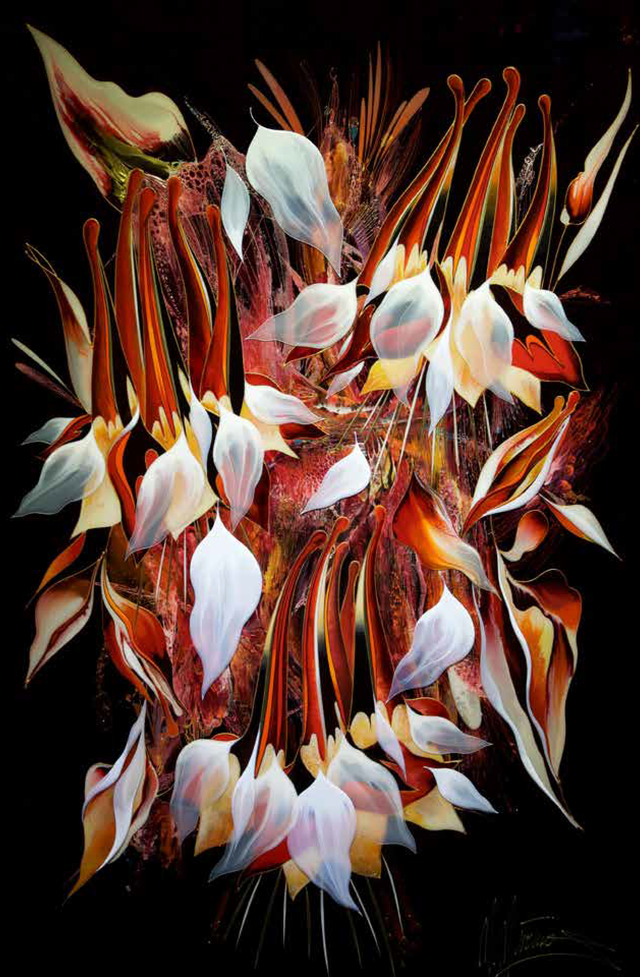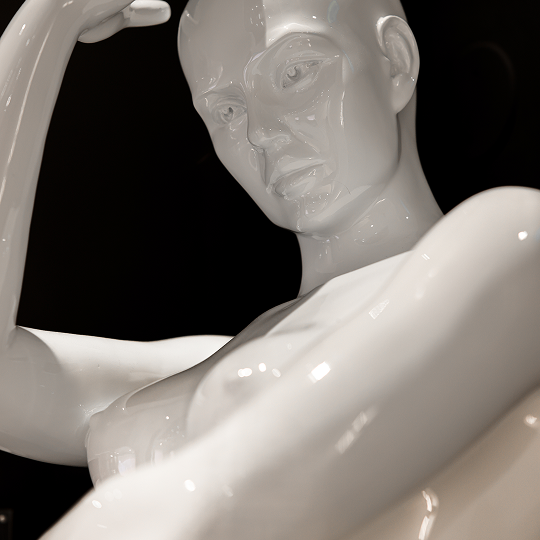
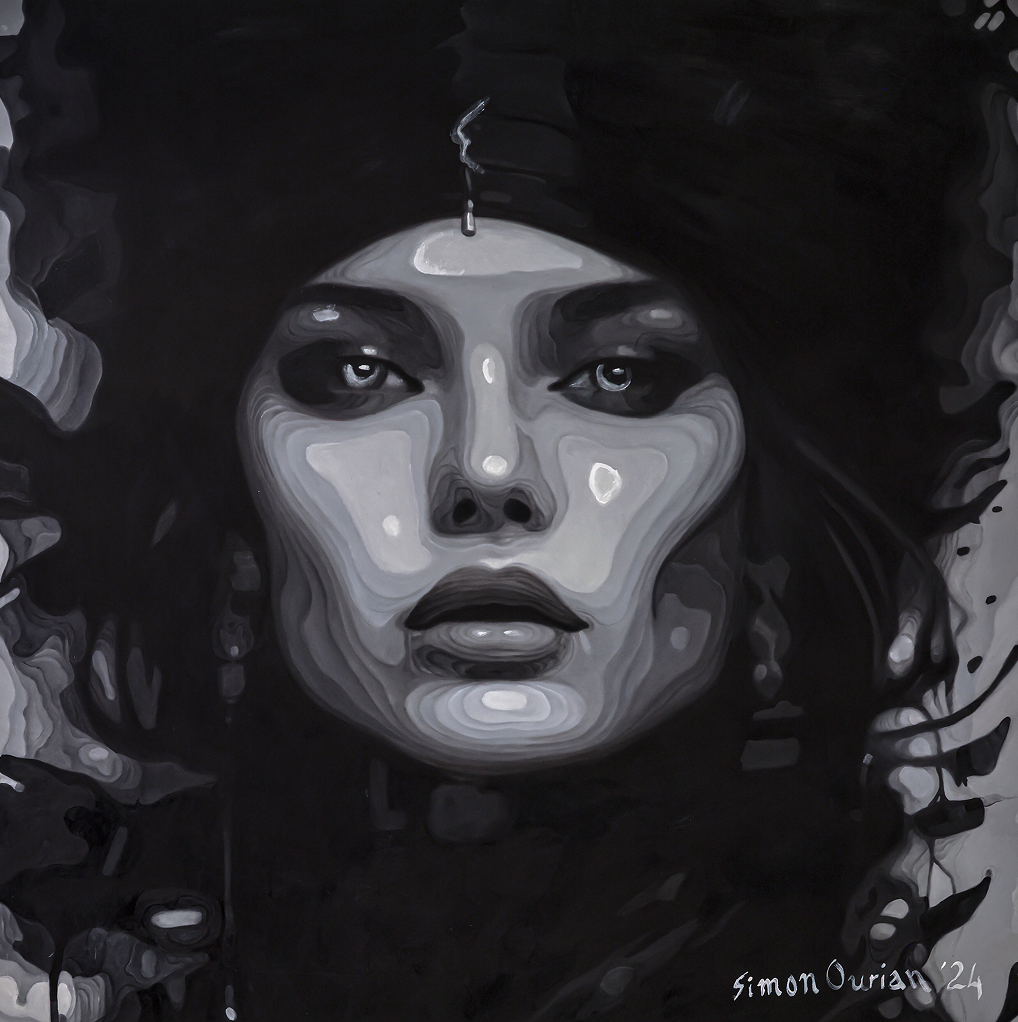
What if the distance between medicine and art is much smaller than we think?
For decades, Dr. Simon Ourian has been internationally recognized for his work in aesthetic medicine. As the founder of Epione Beverly Hills, he has built a career around the human face: studying its anatomy, understanding its proportions, and approaching beauty through balance, precision, and restraint.
But there is another side to Simon Ourian.
He is an artist.
Long before his name became synonymous with modern aesthetics, Ourian was drawn to painting and sculpture. That artistic instinct never disappeared when he entered medicine. Instead, the two disciplines began to inform one another.
In his medical practice, the face became a living canvas. In his studio, clay, bronze, paint, and form became another language through which to explore the same questions: What makes something beautiful? What creates harmony? How much can be changed before identity itself is changed?
The Art Behind the Face
Aesthetic medicine requires more than technical knowledge. The smallest adjustment to a contour can change the way an entire face is perceived. Millimeters matter. Proportion matters. Light and shadow matter.
These are also the concerns of a sculptor.
Ourian has spoken about the connection between his cosmetic work and sculpture, describing both as processes in which many small changes ultimately become one complete composition.
This philosophy helps explain why his transition into fine art feels less like the beginning of a second career and more like the revelation of something that was there all along.
The physician studies anatomy.
The sculptor studies form.
The physician understands structure beneath the surface.
The artist decides what that structure can express.
For Ourian, those worlds meet.
From Epione to the Artist’s Studio
Ourian founded Epione Beverly Hills in 1998 and became widely known for non-surgical aesthetic treatments, facial contouring, injectables, and laser-based procedures. His work has attracted an international clientele and some of the world’s most recognizable public figures.
Yet behind the clinical precision has always existed an artistic eye.
In the studio, Ourian takes ideas he has contemplated throughout his medical career and gives them permanence. A face is no longer altered by an injection or observed through anatomy. It can become an object, a sculpture, a figure, or an exploration of the human form itself.
There is something fascinating about that reversal.
A doctor whose profession has involved working with living faces now creates faces and forms intended to outlive the moment.
When Science Becomes Sculpture
Haykoff Gallery presents Dr. Simon Ourian’s work within this extraordinary intersection of art, science, anatomy, beauty, and transformation.
His story challenges the traditional definition of an artist.
Perhaps an artist is not defined simply by the material held in the hand. A syringe, a pencil, clay, or bronze may be different instruments, but behind each is an understanding of proportion, composition, and human form.
Ourian’s work asks us to look at beauty differently: not as perfection, but as a relationship between balance and individuality, structure and emotion, nature and intervention.
It also raises a compelling question:
Has Dr. Simon Ourian become an artist, or has he been practicing the principles of sculpture all along?
At Haykoff Gallery, the answer can be discovered through the work itself.
Dr. Simon Ourian is an artist and sculptor represented by Haykoff Gallery.